

The classic work I chose to immerse myself in this year. Initially I tried to read a translation in my mother tongue, but I died by a million cuts in the footnotes. I was advised to reach for Emily Wilson's modern English take, and off I went. The flow of this translation was excellent, and reading this ancient story has never felt more fresh. The very first sentence, if I may:
Tell me about a complicated man.
(One worthy mention: it was only after I had already read the English translation that I discovered there's a modern Polish take. Antoni Libera used Polish hexameter and, following Emily Wilson's example, moved away from archaic words as much as possible, making it a much more modern and accessible read.)
Given that I, a non-native speaker, was able to just sit through (quite a) few evenings and read it (sometimes aloud, cause the rhythm is truly captivating), goes to show just how good it is. The fact that she kept the original line count (12,110) while employing traditional English iambic pentameter never ceases to amaze me.
She went to great lengths in the introduction to explain some of her choices and self-imposed constraints. Granted, I'm not a classicist, but I had no objections to any of her takes. Some of them were jaw-dropping, but in a good way, I think, in a way that showed the difference in the culture back then. Her insistence on using the word "slave" to describe, well, slaves made it crystal clear how the social structure worked back then. A sound choice as far as I'm concerned.
It was a stroke of luck, but when I chose Odyssey as my classic work of the year, I didn't yet know that Christopher Nolan was working on the movie adaptation. It made me happy, though, and I resolved to read it before going to the cinema to see it. I managed to pull it off with a few days to spare, and on Friday morning I took my dad to the (fake) IMAX in our local Wroclavia shopping mall to see it.
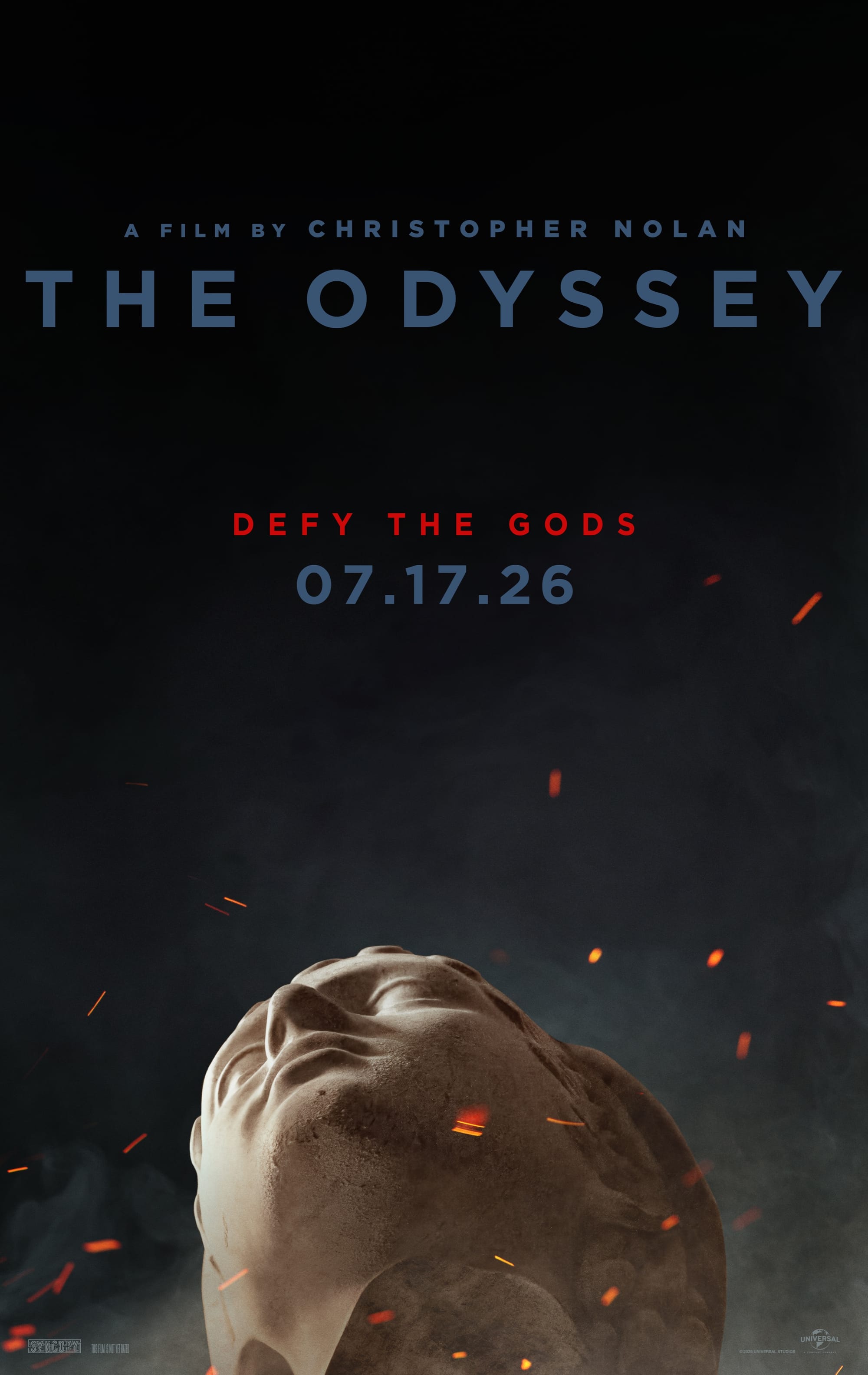
Watching the story unfold on the big screen was very impressive. As far as visuals go, it's really hard to find anything not to like. Beautiful scenery, great costumes, impressive battles. I know there were some controversies here and there, and people looking for historical inaccuracies—I really couldn't be bothered. It's an ancient story, full of shapeshifting gods, myths and legends, are we really going to split hairs about the helmet Odysseus wore?
While the stunning visuals made it an enjoyable spectacle, the story itself was a very mixed bag at best. Some of Nolan's choices I found bizarre, some of them I think were probably for the best as far as the cinematic language goes, some of them were full-blown misses. One of each: the Laestrygonians were bizarre, why on earth are they Robocops with swords all of a sudden? The very ending was probably for the best, especially given Nolan's choice to half-ass deities depiction in the entire movie. Skipping completely the "No Man" trick on Polyphemus was a miss.
Truth be told, Odysseus was a complicated man. He was clever, cunning, and proud. Yes, he was the ruler of Ithaca, but he was also a pirate. His idea to restore wealth consumed (literally) by the suitors was to invade and plunder; not to sit in the corner, and cry about Troy or the collapse of the Bronze Age brought by the Sea Peoples. He was also taking action, and sure, there were gods involved in many of them, but he was still actively pursuing his fate. In the movie things just... happen to him.
Nothing says more than the things that were omitted completely. Zeus's law (xenia) has been stripped of everything that made it matter in the book. The scene with Eurycleia when she recognizes him couldn't be more different in the film than in the book. Skipping the female slave reckoning brought at them in a truly horrible form by none other than Telemachus himself was also left out. But it's the lack of cleverness or, honestly, anything at all that would be captivating about Odysseus in the movie that bothered me the most. The best depictions we had of him were second-hand, because everything else we saw on the screen was just mediocre and soulless.
Was it still worth watching? Absolutely. But the book's depth is lost in the most important places, unfortunately, and I think there's not much that can be done about this sad fact. Read the book, it's so much better it's not even close, and there has never been a better time to do so than now with a modern-age translation available at our fingertips.
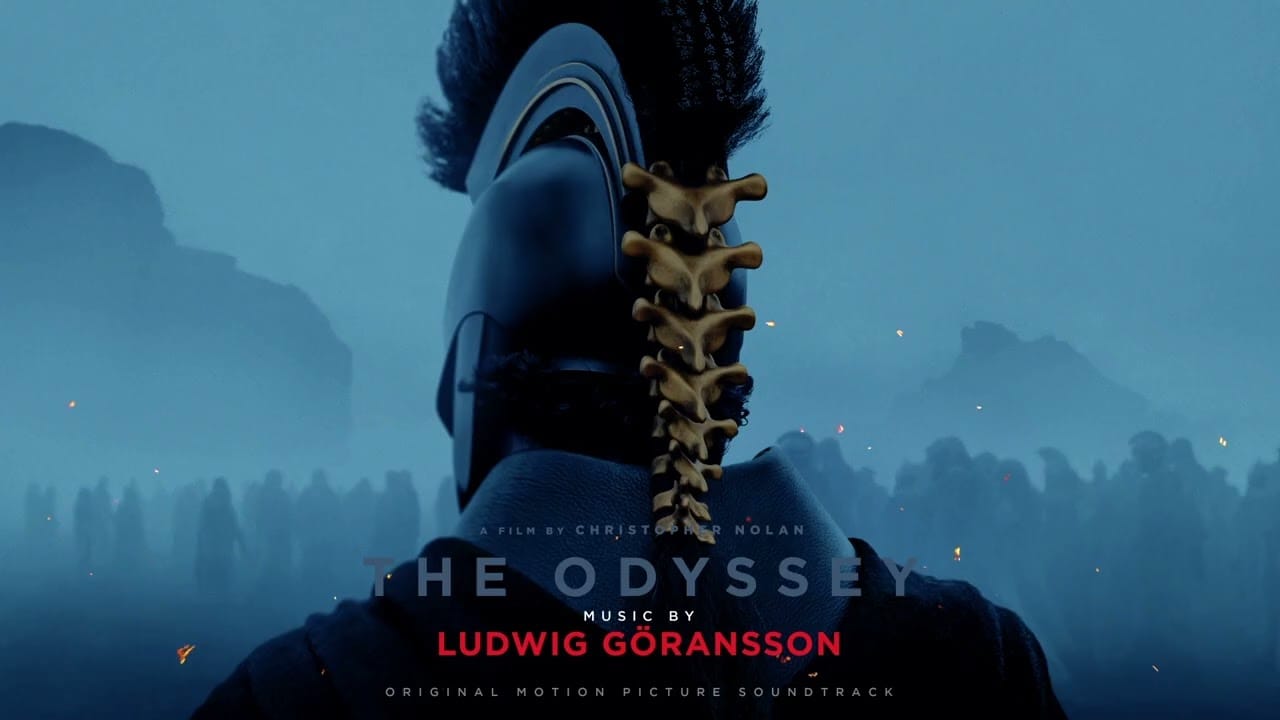
One thing I immediately liked while watching the movie in the cinema was the music. The ending track "When I'm Home" burrowed into my brain, and I was unable to stop listening to it on repeat. I dig the quote that recurs throughout the film:
A face... a fleet... a war... a man... a thought... a trick... a trick to break the walls of Troy... and burn it screaming to the ground!
It's hard for me to understand how it happened that the soundtrack understood Odysseus better than Nolan did. Clearly the trick was a crucial part of taking Troy (duh!), and it was none other than Odysseus who conceived that idea. You know why? Cause he was smart and clever! (I know, shocker.)
I had to get used to the rest of the soundtrack (i.e. everything but the last song), but it eventually landed, and I still listen to it from beginning to end. Not as good as Dune's, granted, but still one I'll be getting back to.
If it wasn't clear in the very opening of this post, I'm a fan of Emily Wilson. After watching the Odyssey film, I went ahead and read her piece in the London Review of Books, titled An Uncomplicated Man. (Yeah, I think the title says it all, honestly 😂) It's a wonderful review, where she lays out so many grievances she has with Nolan's take.
I went further down that rabbit hole, and I also listened to Nolan v. Homer—the LRB podcast with Thomas Jones and Emily Wilson. It's a bit like an appendix to her review, where they analyze the good parts (a few) and the bad (mostly) of the film. Next, I listened to Among the Ancients: The ‘Odyssey’, also an LRB podcast with Jones and Wilson, where they just cover the book as Homer wrote it.
I told you—I immersed myself in this classic like nobody's business. Emily Wilson mentioned in one of the podcasts that when she was translating the Iliad, she allowed herself a bit more leeway, and didn't set out to match Homer's line count this time around. This gave her a lot more breathing room, and she is now halfway through a new edition of the Odyssey where she lifted the line-count constraint. If anyone has earned the right, it's her—she already proved she could do it, and now she wants more room to carry the sound of the original.
I will read her translation of the Iliad (after taking a break from Ancient Greece), and I will then most certainly read the new edition of the Odyssey. I can't recommend it enough.

Discussion